You’ve Just Learned Your Baby Is Deaf. What Next?

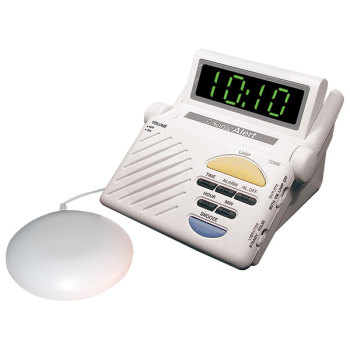
First, make sure that your baby actually has a hearing impairment by getting a professional evaluation. Many newborn babies with normal hearing will fail their initial hospital hearing screenings, and babies with normal hearing under the age of three months may appear not to hear loud sounds. Until they pass three months of age, they can often sleep through the sound of smoke alarms, cell phones, fire sirens and other loud noises.
Once you are certain that your baby has a hearing loss, you will have many questions if you have no prior experience with deafness. Parents of a deaf child can benefit from interacting with other families in the same situation. Exchanging information and sharing experiences and expectations with other parents can be a valuable bonding experience and can lead to lifelong friendships for you and your deaf child. Try some Mommy And Me Sign Language classes, and see if you can involve your partner, grandparent or another one of your children as well. Many of these classes have family and sibling discounts. You can also reach out online to one of the many deaf and hard of hearing agencies for information and guidance.
Families will encounter others who have made various choices for raising their deaf child. Some families will choose to learn sign language, where others will choose to use speech and lipreading exclusively. There will be some families where one or both parents are deaf, and the child is hearing. Also, some families may have one or both parents who are deaf, with a mixture of hearing and hearing-impaired children. You can go online to find many resources available to you. Search for phrases such as “education of the deaf,” “schools for the deaf,” “sign language for babies,” “children of deaf adults,” and “hearing loss association” to give you a starting place for local groups and information.
There will be some decisions to be made regarding educating and communicating with your deaf child. A great deal depends on the type and degree of your child’s hearing loss. Familiarize yourself with his audiogram, which is the chart of his hearing loss. Not all hearing loss is the same, so be sure you understand what the audiogram means in regard to how your child may perceive speech.
Some questions to consider are:
- Will you choose to use sign language, or will you opt for oralism?
- Will you learn and use the “cued speech” system to help your child understand speech?
- Will you choose to mainstream your child in regular schools, enroll him in a day school for the deaf, or place him in a residential deaf school?
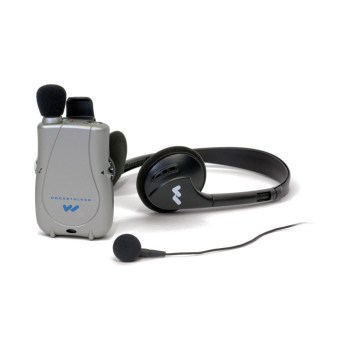
- Will you fit your child with some kind of hearing aid?
It is never too early to start considering these issues. The best time for language development is in the preschool years, so any steps you will take regarding hearing amplification should be taken as early as possible.
You may choose to encourage your family to learn sign language. Learning some basic sign language and teaching it to your baby can be very beneficial. In addition to aiding in language development, the use of sign language can help reduce the baby’s tantrums and frustration caused by the inability to communicate his wants and needs. Signing Smart: My First Signs Board Book is an excellent first signs book for you and your baby.
If you and your family are unfamiliar with sign language, don’t worry. You don’t have to be experts in signing in order to communicate with your hearing-impaired baby. Focus first on the signs for the words the child will encounter in everyday life, such as mommy, daddy, eat and sleep. You can step up to a larger vocabulary and sentence formation as your child grows.

To expand your proficiency, there are many sign language books and courses available for adults. An excellent book is Signing Made Easy . To build your vocabulary, try The Gallaudet Dictionary of American Sign Language . An excellent aid for seeing the movement of each sign is the Sign Language Translator . With this device you can look up a sign just as you would look up a word in an electronic thesaurus. It’s important to see the movement of signs because movement is a grammatical marker in sign language. The way a sign moves can completely change its meaning.
Start signing with your baby right away, no matter how young the child is. Repetition is the key to learning, and the more your baby sees a sign, the quicker he will learn it. Just as hearing babies’ first attempts at speech will sound different than adults’ speech, a baby’s signing will look different than an adult’s signing. Be open to your child’s variations on the signs you have shown him. If you often read and sign to your baby, be alert to his attempts to imitate your signs as you read to him. Encourage him to sign along with you so you will learn “his” way of signing. As he grows and gains better control over his hands, his signs will become adult signs.
Whether you choose to use only oral speech with your deaf child, or to incorporate sign language into your family’s communication, there are many resources available to you. Families who are new to deafness will find the deaf culture to be socially and linguistically rich.
Take advantage of all HearMore has to offer, says Elliot Zaretsky. We carry books, DVDs, educational materials and a wide range of assistive devices for deaf and hard of hearing children and their families. Subscribe to our newsletter and find out about our special weekly discounts. You can also look us up on Facebook or follow us on Twitter for up-to-the-minute news and product updates.
Visit us at www.HearMore.com or contact us at the following numbers:
Voice: (800) 881-4327
TTY: (800) 281-3555
Fax: (631) 752-0689
Video Phone: (631) 752-1145
Text: (631) 742-3277
Email: sales@hearmore.com.